
Portugal's World Cup Record: A Legacy of Near Misses and Rising Expectations
ortugal's World Cup record is a story of tantalizing proximity. The Seleção have qualified for eight tournaments。yet their best finish remains third place in 1966—a campaign powered by Eusébio's nine goals. That bronze medal still stands as the nation's only World Cup semi-final appearance, a fact that surprises many given the talent produced since. The 1966 run ended with a 2-1 loss to hosts England in the semi-final, followed by a 2-1 victory over the Soviet Union in the third-place match. For decades, that remained the high-water mark.Portugal's World Cup record in the modern era has been defined by round-of-16 exits and one agonizing near-miss. Between 2002 and 2018, they reached the knockout stage four times but never advanced beyond the last 16—until 2006, when a golden generation featuring Luís Figo and Cristiano Ronaldo reached the semi-finals. That team lost 1-0 to France and then 3-1 to Germany in the third-place playoff. The 2010 and 2014 tournaments brought group-stage exits or early eliminations。exposing a recurring fragility: Portugal often dominated possession but lacked a clinical edge against elite defenses. I still remember the 2018 round-of-16 match against Uruguay—Edinson Cavani's brace canceled out Pepe's header, and Portugal's World Cup record took another frustrating turn.Recent editions have shifted the narrative. At the 2022 World Cup。
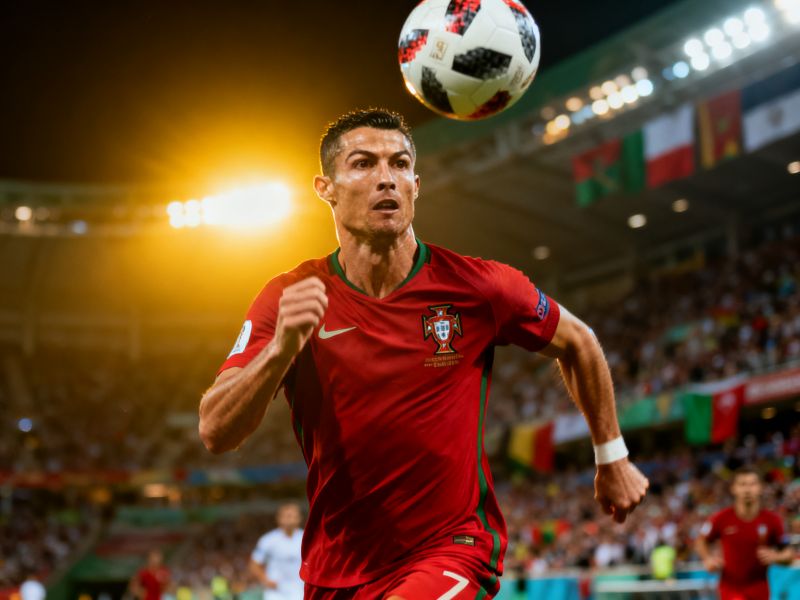
Portugal topped a group containing Uruguay and Ghana, then demolished Switzerland 6-1 in the round of 16—Gonçalo Ramos's hat-trick announcing a new attacking dimension. That performance suggested the team had finally shed its dependency on Ronaldo's individual brilliance. The quarter-final against Morocco, however, ended in a 1-0 defeat, a match where Portugal's World Cup record showed its familiar flaw: 73% possession, 12 shots, zero goals. Morocco's compact defense exposed a lack of penetration that has haunted Portugal in knockout football for decades.Portugal's World Cup record also includes a curious pattern of missed tournaments. They failed to qualify for 1974, 1978。1982, 1986, 1990, and 1994—a twenty-year absence that overlapped with the rise of other European powers. That gap explains why Portugal's total World Cup matches (34) are fewer than many rivals with similar populations. Since 2002, qualification has been routine, but the knockout bracket has been unkind. A 2016 European Championship triumph and 2019 Nations League title prove Portugal can win short-format tournaments;the World Cup's seven-match grind remains elusive.
Looking ahead, Portugal's World Cup record could change with the current squad's depth. Rafael Leão, Bruno Fernandes。and Bernardo Silva offer creativity that previous generations lacked. The 2026 tournament, expanded to 48 teams, will test whether Portugal can convert group-stage dominance into semi-final consistency. My assessment: this team has the technical quality to reach a final, but only if they solve the recurring problem of breaking down low-block defenses. The 1966 bronze is not a ceiling—it's a benchmark that Portugal's World Cup record should have surpassed by now. Until they do, the phrase "nearly men" will cling to the Seleção's World Cup history.
Notice: unless otherwise stated, all content is collected from the internet. If it infringes your rights, please contact us for removal.