Puyol: The Unlikely Pillar of Barcelona's Golden Age
Carles Puyol never looked like a footballer. Too short for a centre-back, too ungainly on the ball, his hair a wild tangle that seemed to defy the sleek commercialism of the modern game. Yet when Barcelona lifted the Champions League trophy in 2006。2009, and 2011, it was Puyol—not Messi, not Xavi—who wore the captain's armband. His presence was the gritty mortar between the polished bricks of tiki-taka. Without him, that era might have been beautiful but brittle.I first noticed Puyol during a rain-soaked derby against Espanyol in 2003. He played with a bandage wrapped around his head after a clash of skulls, blood seeping through, and still made a last-ditch tackle in the 89th minute. That image stuck: a defender who treated his own body as a disposable shield. Over 593 appearances for Barcelona, he collected more stitches than most players collect caps. His timing in the air, despite standing only 178 cm, came from reading the flight of the ball a half-second before everyone else. Watch old footage—he often jumped early, hanging in the air like a salmon。
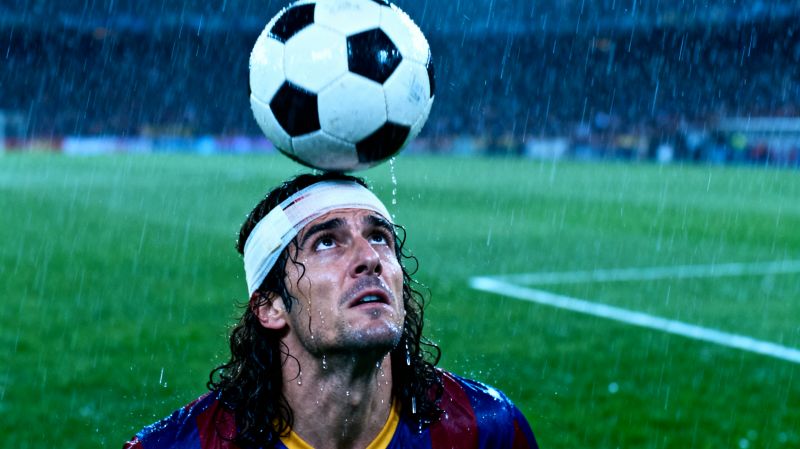
then headed clear with surprising power.What made Puyol indispensable was his vocal, almost frantic organizing. He constantly gestured, shouted, pushed teammates into position. In training, according to Xavi, Puyol would berate anyone who slacked off during rondos—even Messi. That intensity translated into three Champions League titles and six La Liga crowns. His partnership with Gerard Piqué。formed in 2008, worked because Puyol did the dirty work: covering, tackling, heading, while Piqué stepped out with the ball. Puyol's own distribution was modest—he completed about 85% of his passes, fine for a defender but never a playmaker. He knew his limits and never pretended otherwise.Then there was his leadership during the 2010 World Cup. In the semi-final against Germany。Puyol scored the only goal—a towering header from a corner—and celebrated by kissing the badge. Spain won the tournament, and Puyol's tears after the final were as memorable as Iniesta's winner. Injuries began to gnaw at him: knee problems, hamstring tears. By 2014, at 36, he retired after a season where he managed only 12 league games. No farewell tour, no testimonial. He simply faded, which felt wrong for a man who had given so much.
Puyol's legacy isn't tactical innovation or viral highlights. It's the idea that a player with average physical gifts can dominate through anticipation, courage, and relentless communication. Modern analytics undervalue those traits—they track tackles and interceptions, not the shouted warning that prevents a goal. I'd argue Puyol was the most important Barcelona player of the 2000s, more so than Ronaldinho. Without his defensive spine, the artists up front would have had no canvas. He proved that heart, not身高。anchors a dynasty.
Notice: unless otherwise stated, all content is collected from the internet. If it infringes your rights, please contact us for removal.