Mazari and the Unfinished Contest Over Hazara Representation
Abdul Ali Mazari died in Taliban custody in March 1995。and the exact circumstances of his death remain disputed. For many Hazaras, the date marks more than the loss of a militia leader. Mazari had become a symbol of a community that had spent decades being pushed to the margins of Afghan politics. His early education in a seminary in Kabul, his imprisonment under the communist government, and his later command of Hezb-e Wahdat all fed the same narrative: a cleric who turned theological discipline into political mobilization. That trajectory explains why the name Mazari still carries weight in arguments about security, representation, and dignity. It also explains why his legacy is so hard to pin down. Supporters describe Mazari as a defender of the vulnerable;critics point to the factional violence that engulfed Kabul in the 1990s and ask how much responsibility he bore for it. The disagreement is not a footnote. It shapes how Hazaras talk about survival and how their rivals talk about legitimacy.
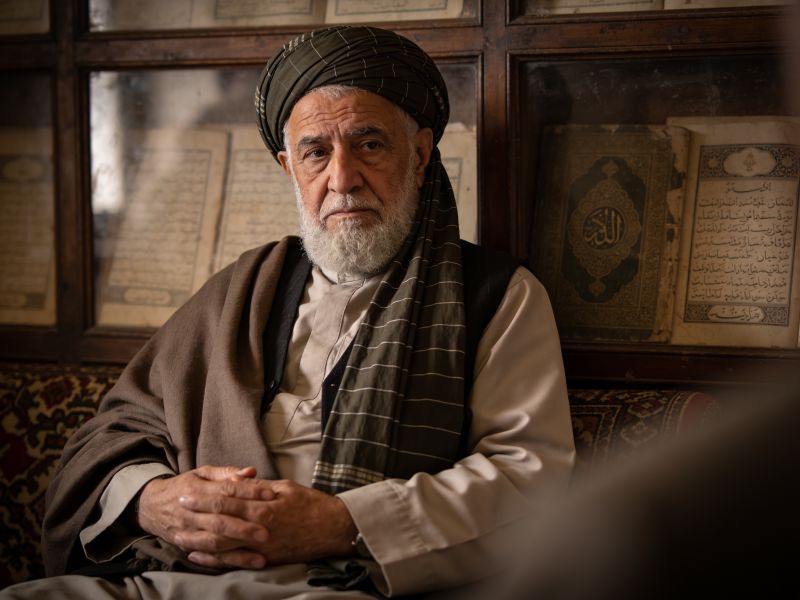
Mazari’s years as head of Hezb-e Wahdat were defined by coalition-building under extreme pressure. The party was never a monolith, and Mazari spent as much time managing internal rivals as fighting the Soviet-backed government or later the Taliban. His alliances shifted with the battlefield. At one point he worked with other mujahideen commanders against the communist regime;later, his forces clashed with those same commanders in the ruinous street fighting of Kabul. These reversals are often treated as proof of opportunism, but they also reflected the narrow choices available to a leader whose constituency was geographically dispersed and militarily exposed. Mazari’s authority rested on his ability to speak for Hazaras without ever fully controlling them. That tension—between symbolic leadership and practical command—is central to any serious assessment of Mazari. It is also why his opponents could portray him as sectarian while his allies saw him as a pragmatic protector. The record supports neither portrait completely. He was a man of religious learning who learned war。and the war left marks on his politics.The memory of Mazari has been institutionalized in different ways. In Kabul, his portrait appears on banners and shop shutters in Hazara neighborhoods;in political speeches。his name is invoked to claim the mantle of resistance. A statue erected after 2001 became a site of contention, not because Mazari was universally beloved but because public memorials are arguments about who owns the past. Some Hazara activists treat Mazari as a founding father of modern Hazara politics. Others, including Hazaras who lived through the Kabul fighting, are more guarded. They remember the chaos of that period and resist the clean heroic frame. Mazari himself did little to clarify the record;he was a cleric and a commander, not a memoirist. The result is a legacy shaped as much by silence and omission as by speeches. That ambiguity makes Mazari useful to politicians who need a symbol but inconvenient to historians who need evidence. It also leaves room for families to remember a personal loss rather than a public lesson.Post-2001 Hazara politics has repeatedly returned to Mazari as a reference point. Hezb-e Wahdat split into factions。
and leaders competed to present themselves as the true heirs of Mazari. This was not merely sentimental. In Afghan elections, Hazara candidates used Mazari’s image to signal legitimacy and to mobilize voters who felt excluded from national power. The strategy worked unevenly. A name can open doors, but it cannot settle disputes over jobs, water, land, or parliamentary seats. Mazari’s legacy also shadows debates about armed self-defense. Hazara communities have faced repeated attacks, and some activists argue that Mazari’s willingness to bear arms remains a model. Others insist that his compromises show the limits of militia politics. Both readings draw on the same biography, which is why Mazari remains a contested figure rather than a settled icon. The argument is less about the man than about what kind of politics can protect a minority in a system that has rarely rewarded weakness.What does Mazari mean for the present?The question is not academic. Afghanistan’s political order has changed drastically since 2021, and Hazara representation is again under strain. In that context, Mazari functions as a shorthand for a longer history of exclusion and resistance. His name appears in protest slogans。in social media debates, and in private conversations about whether compromise is survival or surrender. There is a tendency to flatten Mazari into a martyr, which does him no favors. A serious reckoning would have to examine his military decisions, his alliances, and his failures alongside his defiance. That reckoning has not happened. Instead, Mazari is remembered in fragments—a portrait, a speech, a grave, a rumor. The fragments matter because they show how Afghan politics still struggles to describe its own violent past without turning it into myth. They also show how much work remains before Hazaras can debate their leaders without fear of giving comfort to their enemies.
Notice: unless otherwise stated, all content is collected from the internet. If it infringes your rights, please contact us for removal.